
Welcome to AIMMLab’s Research Toolbox!
This page provides an overview of the tools, software, and resources that AIMMLab frequently uses in research. From analyzing data to visualizing results and managing projects, these tools are integral to our workflow. You’ll find information on statistical software, programming languages, data visualization platforms, literature review aids, and other resources that streamline our research process.
We hope this page offers insight into AIMMLab’s approach to research and helps you discover tools that might be useful for your own projects

The RStan tool develops a probabilistic programming language that implements full Bayesian statistical inference via Markov Chain Monte Carlo, rough Bayesian inference via ‘variational’ approximation, and (optionally penalized) maximum likelihood estimation via optimization.
1. Visit this link for installation.
2. To get started, visit this link.
3. For publications in the lab using Rstan, visit the links:

EndNote is a reference management software widely used in systematic reviews to organize, manage, and de-duplicate large sets of citations. It facilitates the import of references from multiple databases (e.g., PubMed, Scopus, Web of Science) and enables researchers to screen titles and abstracts efficiently. EndNote’s built-in tools help identify and remove duplicate records, ensuring a cleaner dataset for the screening process. It also integrates seamlessly with word processors for citation management and bibliography generation, making it a valuable tool throughout the systematic review workflow.
- To get started using ENDNOTE for systematic reviews, kindly use this link.
- For published studies in the lab relating to systematic review, please follow these links:
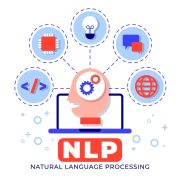
Social media has been successfully used in different fields such as behavior analysis, spam detection, electoral prediction, event detection, and economy.
Sentiment analysis focuses on identifying the emotional tone or attitude expressed in a piece of text. It classifies content as positive, negative, or neutral, and can also provide sentiment scores to indicate intensity. This method is particularly useful for gauging public opinion, analyzing customer feedback, or monitoring social media sentiment. In contrast, topic modeling aims to uncover the underlying themes or topics present in a collection of documents without requiring prior labels. Using unsupervised machine learning algorithms such as Latent Dirichlet Allocation (LDA), topic modeling identifies clusters of co-occurring words that form coherent topics, helping researchers understand what people are talking about. While sentiment analysis answers the question of how people feel about something, topic modeling addresses what they are discussing. Together, these techniques offer a powerful combination: topic modeling can reveal major areas of discourse, while sentiment analysis can assess the emotional stance within each identified theme.
For published studies in the lab relating to systematic review, please follow these links: